


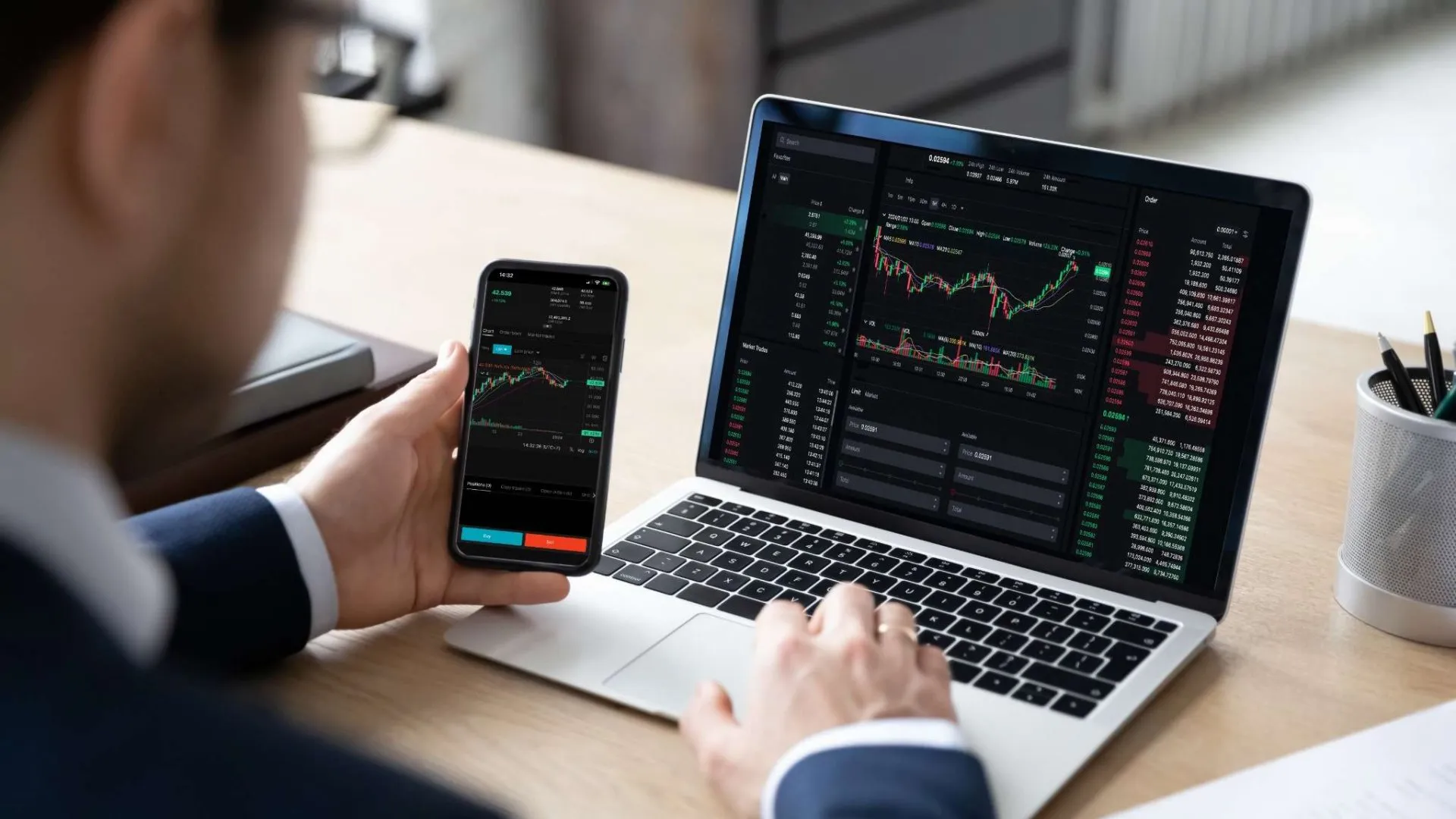
One of the hottest topics in the world of finance is leverage trading. Beginners often come across tales of traders who have been able to make huge profits from small deposits, but at the same time, they are told that leverage trading may result in massive losses.
In this simple yet comprehensive article on leverage trading, you will learn all about leverage trading and how it can be used efficiently by traders while keeping in view its benefits and drawbacks.
What Is Leverage Trading?
The phrase what is leverage trading involves using borrowed funds from brokers or trading firms to place trades that would otherwise require more capital.
In other words, leveraging allows traders to make use of funds that they cannot place a trade with on their own.
For instance:
- Without leverage, you have to commit $1,000 to make a trade.
- But if you use 1:100 leverage, all you need for a trade is $10.
- It means that leverage magnifies both gains and losses in trading.
Leverage is mostly used when trading:
- Foreign exchange
- Crypto currencies
- Stock contracts for differences
- Commodities
- Stock indices
While leverage looks thrilling for novices in the trading business, it should be managed appropriately.
How Does Leverage Trading Operate?
For better understanding of leverage trading, one should know how leverage and margin are interrelated.
What Is Margin?
Margin is the initial capital used for opening a leveraged position.
For instance:
- Broker provides 1:100 leverage.
- Your goal is to control $10,000.
- Only $100 is required to cover 1% margin.
- A broker will provide the rest.
- Example of Simple Leverage
- Suppose that you have $200 on your trading account.
Using:
- 1:1 leverage – you can trade $200
- 1:10 leverage – you can control $2,000
- 1:100 leverage – you can control $20,000
When the market goes your way, potential profits increase. On the other hand, when the market moves contrary, then losses rise fast.
This explains why novice traders should know about risks associated with leverage.
Why Traders Use Leverage?
Traders prefer leverage since it enables them to maximize their opportunities with less capital.
1. More Market Exposures
With the help of leverage, a trader can take bigger positions without putting in large deposits.
Even an inexperienced trader with a low deposit amount will be able to benefit from significant market actions through leverage.
2. Increased Returns
Even small changes in the market can result in huge profits due to leverage.
For instance:
A change in the market by 1% without leverage might lead to small profits.
In contrast, the same percentage change in the market with leverage can yield greater profit margins.
3. Utilization of Funds
Since leverage allows a trader to trade with less capital, some remaining funds could be kept aside for hedging purposes.
This is very helpful in a funded account where traders have to maintain discipline.
Risks Associated with Leverage Trading
Although leverage amplifies gains, it also multiplies potential losses. It is the fundamental concept that beginners must grasp.
1. Swiftly Increasing Losses
Even minor adverse fluctuations in the market can cause quick damage to your trading account.
For instance:
Using extreme leverage on a fluctuating market could render your balance worthless within a few minutes.
2. Emotional Trading
Sharp price changes might lead to feelings of panic and greed.
Leverage-trading newbies may:
- Exit trades in a frenzy
- Over-trade
- Take revenge trades following losses
3. Margin Calls
When losses exceed certain levels, brokers will issue margin calls or liquidate your positions automatically.
Such a situation arises when the equity in your trading account drops below a specified minimum.
It is crucial to understand these risks when comprehending leverage trading.
Standard Leverage Ratios
Various brokers and markets provide various leverage ratios.
Some Common Cases
- 1:10 – low leverage ratio
- 1:50 – medium leverage ratio
- 1:100 – high leverage ratio
- 1:500 – extremely high leverage ratio
Novice investors generally need to begin with low leverage for obvious reasons.
Professional investors generally employ low leverage even when they have more leverage available.
Leverage in Forex Trading
Forex trading is among the most highly leveraged markets around the globe.
Most currency pairs move rather slowly relative to stocks or cryptocurrencies. This is the reason why brokers provide high leverage to enable traders to make money.
For instance:
- The EUR/USD pair could just move by 1% per day.
Through leverage, this movement becomes highly amplified.
Many individuals learning about what is leverage trading will most likely stumble upon it through forex trading.
But, novices must not consider that high leverage automatically ensures gains.
Risk Management Tips for New Traders
Leverage can be used responsibly if appropriate risk management principles are followed.
Take Small Positions
Don’t wager your whole capital on one single trade.
Successful traders usually stake just 1–2% on each trade.
Employ Stop-Loss Orders
Stop-loss orders will close your positions if there’s a movement against you.
It will help to minimize losses.
Avoid High Leverage
Even if there is high leverage like 1:500, it doesn’t necessarily mean you have to use it.
Low leverage means less risk.
Work towards Consistency
The ultimate aim is to survive in the long run.
Consistent small wins are better than taking huge risks.
Leverage and a Funded Account
A funded account is an account offered by a prop firm where traders employ company capital instead of their own funds.
Leverage is vital in such trading programs since traders should weigh the opportunities against risks.
Why Leverage is Crucial in a Funded Account
Most prop firms provide leverage to enable traders to trade bigger amounts while adhering to the drawdown restrictions.
Using leverage recklessly can lead to a violation of the firm’s regulations.
Effective Use of Leverage in a Funded Account
Skilled traders with funded accounts typically:
- Adhere to controlled position size
- Manage their capital prudently
- Implement stringent risk management strategies
- Do not make impulsive decisions
- The most skilled traders know that the protection of the account outweighs pursuing substantial profits.
A trader who comprehends the concept of leverage trading has more chances of overcoming the challenges from prop firms and maintaining their funded accounts.
Pros and Cons of Leverage Trading
Pros
- It enhances buying power.
- It allows you to trade using less capital.
- Larger profits are generated.
Cons
- It generates greater losses.
- It makes you emotionally trade.
- Your account may be subjected to liquidation.
- Strong self-discipline is required.
Is It Good for Beginners to Trade With Leverage?
Leverage trading is beneficial for beginners when it is done with care.
The main thing is education and discipline.
Beginners have to:
- Trade on demo accounts
- Utilize small leverage
- Acquire technical and risk management skills
- Not overtrade
Leverage by itself is not risky. The problem arises from misuse of leverage.
Risk-conscious traders tend to use leverage well, but risk-indifferent traders always fail fast.
Conclusion
It is crucial to have knowledge of leverage trading before you can participate in any financial market activity. Leverage enables the trader to trade in a much higher position than the actual amount invested. But this comes with high risks.
As a beginner, the best way forward is to learn how to use leverage cautiously, concentrate on risk management and ensure you achieve consistency. Leverage does not play the major role regardless of whether you will be trading with personal or funded accounts.